
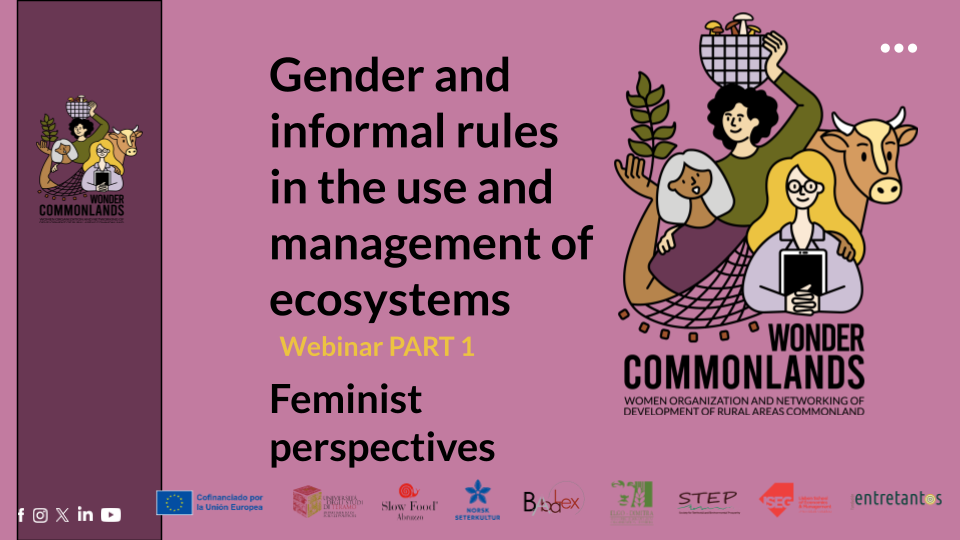
Videos_Gender and informal rules in the use and management of ecosystems: Feminist perspectives
What role does gender play in how we use, manage, and conserve our common lands and natural ecosystems? This video series, born from the WonderCommonlands webinar on gender and informal rules, brings together researchers, practitioners, and community leaders from across Europe to explore this question from multiple angles — combining academic insight, policy critique, and inspiring grassroots experience.
The series opens with a welcome and framing session that sets the scene, followed by a powerful introduction from Norsk Seterkultur (Norway), asking a question that runs through the entire series: why should gender be an issue in nature conservation and management at all?
From there, the videos move into a rich exploration of contributions and challenges. Aase Kristine Lundberg(Nordlandsforsking) exposes the gaps and silences around gender in climate policies across the Global North, while Manuela Tavares (UMAR) shares insights from the GIESTA Project, documenting the lives and knowledge of women living in the villages of Portugal’s Lafões region.
The series then turns to inspiring initiatives. Joana Nogueira tells the story of a growing network of Portuguese women shepherds, weaving solidarity and shared purpose across pastures and encounters for the common good.
A central thread of the series is feminist perspectives and tools for change. Luisa Barateiro (UMAR) explores what ecofeminism can teach us today, while Inger Marie Vingdal (OsloMet) brings us the story of the Budeiene — the dairymaids — daughters of nature whose knowledge and labour have shaped landscapes for generations.
The final videos focus on approaches and tools for valuing local knowledge. Alexandra Meyer (University of Vienna) examines culture-based solutions at the intersection of farming and climate change, and Chris Blake (The Green Valleys and Community Energy Wales) presents an inspiring model of community land stewardship from the South Wales Valley, showing how linking people’s values with forest planning can make a real difference.
Together, these videos make a compelling case: that gender is not a side issue in commons governance and ecosystem management — it is central to it. And that feminist perspectives, local knowledge, and women’s leadership are not just valuable, they are essential.